Product
Introducing Trovato
The agentic legal work platform where every answer traces back to its source — now generally available.
25 June 2026 · Romano Plescia, Founder & CEO
Ask any lawyer what makes them hesitate to lean on AI, and you'll hear a version of the same thing. Not "can it do the work" — it plainly can. It's "can I put my name to what it gives me." A draft you have to re-check line by line isn't leverage; it's a second job. And for the people who run a firm, two more questions sit underneath that one: what is all of this costing, and how do we account for it to clients?
Those three problems — trust, cost, and accountability — are why most legal AI stalls after the pilot. They're also exactly what we set out to solve.
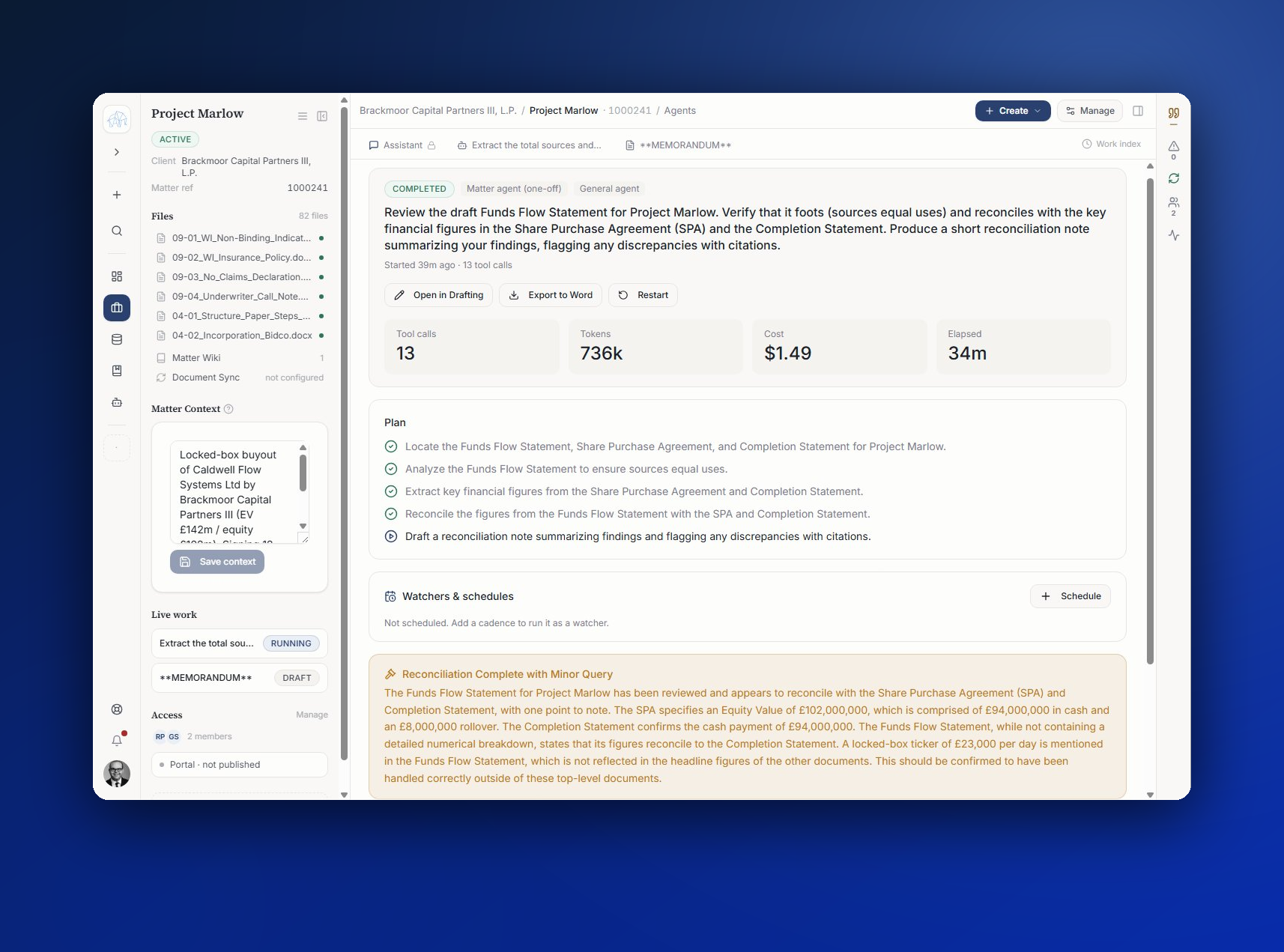
I'm proud to announce that Trovato is generally available. It's the product of twelve months of work from a team I couldn't be prouder of, and it's built on one non-negotiable idea: when the platform shows you a conclusion, you can click straight through to the exact passage in the exact document it came from. Anything we can't ground in a source, we don't show you.
Here's what that makes possible.
Know What's Been Decided, Without Re-Reading the Matter
Legal work compounds over weeks and months. The files pile up — but the judgement, the conclusions your team has actually reached, doesn't live anywhere you can search. So every time someone picks up a matter mid-flight, they rebuild context from scratch.
The Matter Wiki fixes that. It's a structured, continuously maintained knowledge layer that lives alongside each matter, capturing risk findings, negotiation positions and research conclusions as the work happens — each entry summarised, cross-referenced, and cited back to source on every claim.
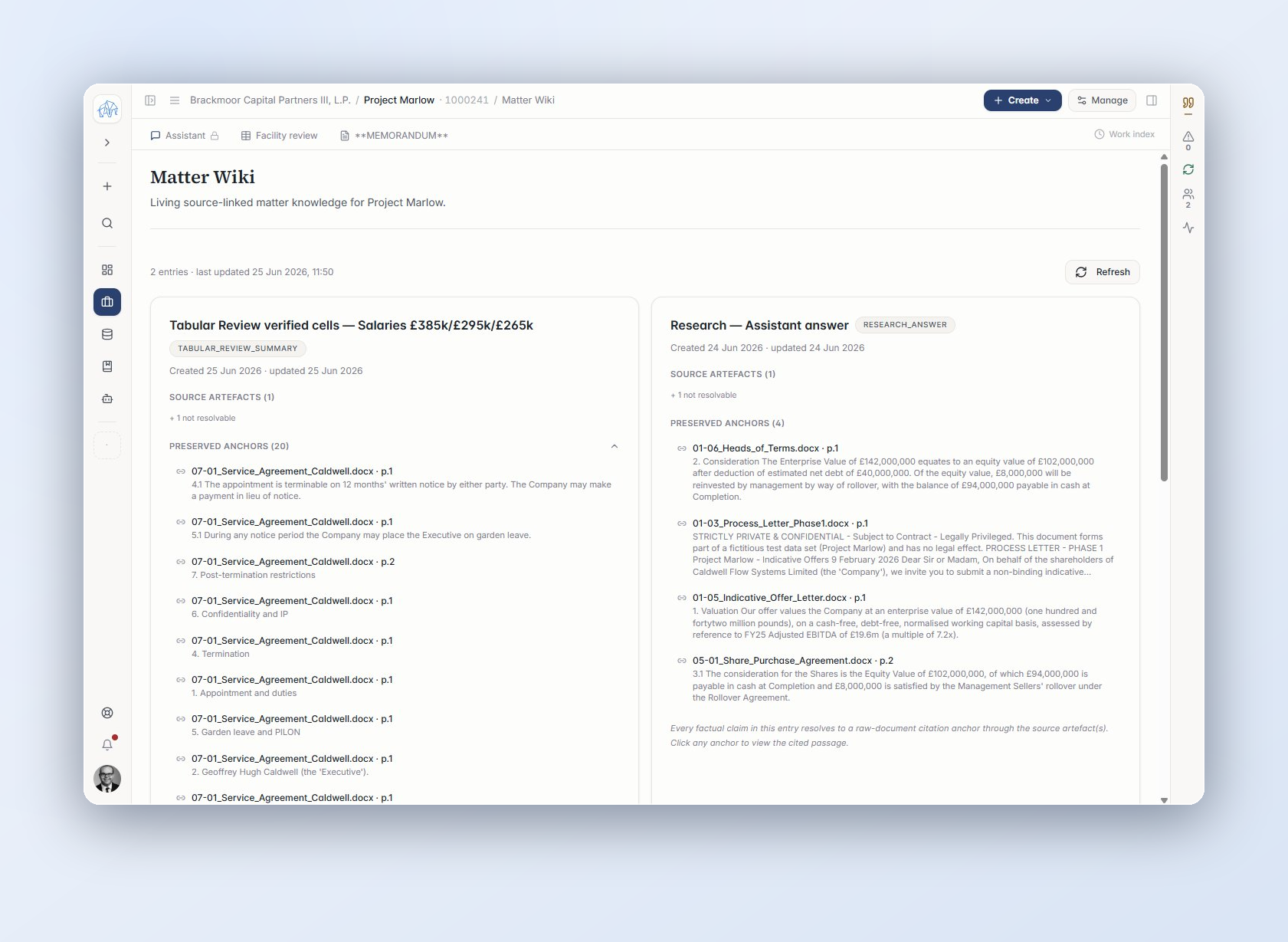
A lawyer returning after two weeks away can ask the matter what's been concluded, rather than re-reading a data room to find out. Click any anchor and you land on the exact cited passage. And because the Wiki updates as positions change and flags its own contradictions, what you're reading is current — not a snapshot from three rounds ago.
Delegate the Legwork, Keep the Judgement
What if the first pass through a data room just… happened? Not unsupervised, not in a black box — but done, and ready for you to check?
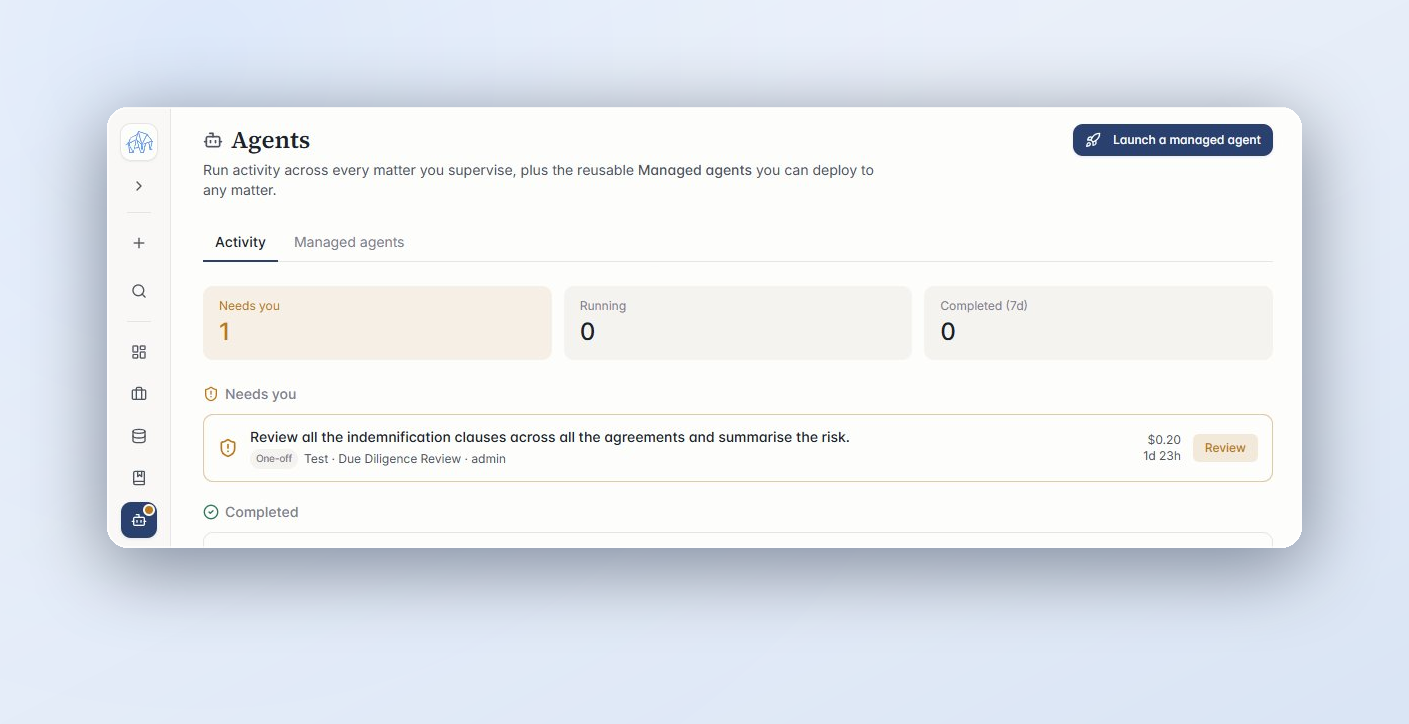
That's what Matter Agents are for. They plan a task, carry it out across the documents in a matter, and hand back a reviewable deliverable. Point one at a stack of contracts for issue-spotting, a structured comparison, or a first-pass review, and supervise the result instead of grinding through it. The agents that need your attention surface first, so overseeing work across several matters is a glance, not a chase.
Supervision is built in, not bolted on. Before an agent finalises anything, it shows you exactly what it's about to write, what it's staging for the Matter Wiki, and how those findings hold up against the citation firewall. Approve and continue, send it back to be re-run with new instructions, or stop it — every decision recorded in the audit log.
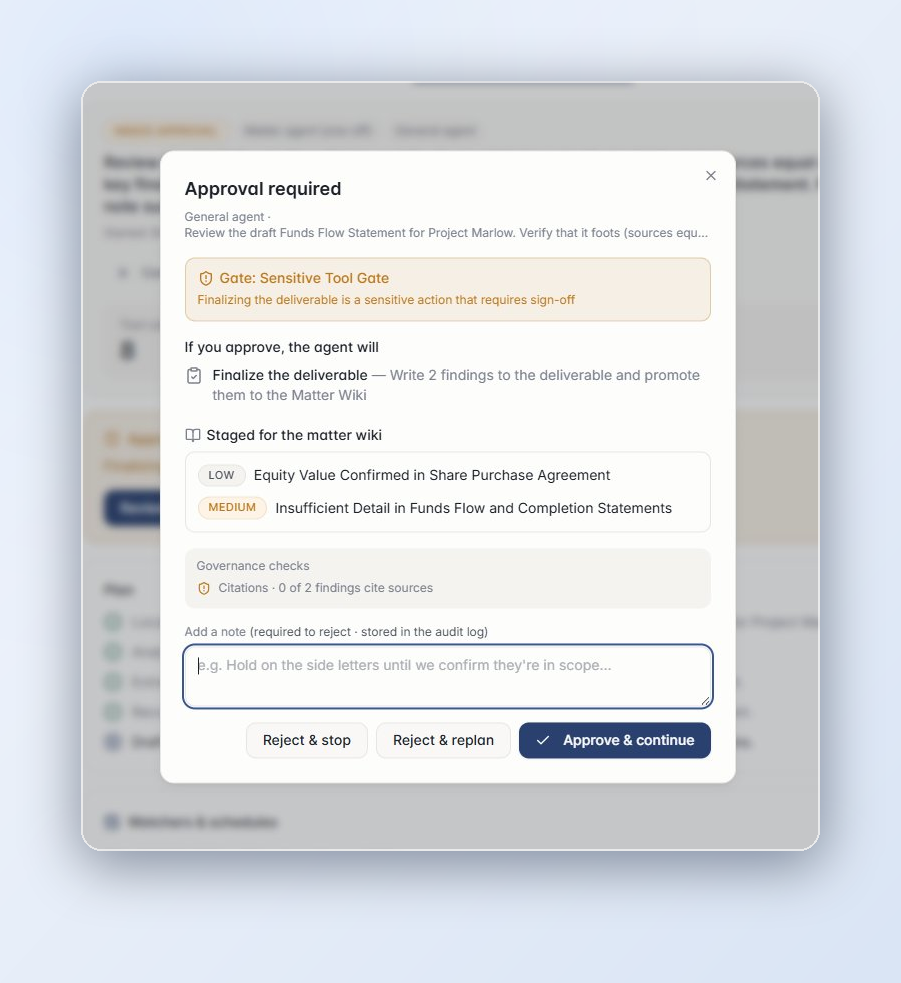
Because every finding is cited, reviewing means weighing judgement — not hunting for where a claim came from.
Redlines That Open in Word, Ready to Send
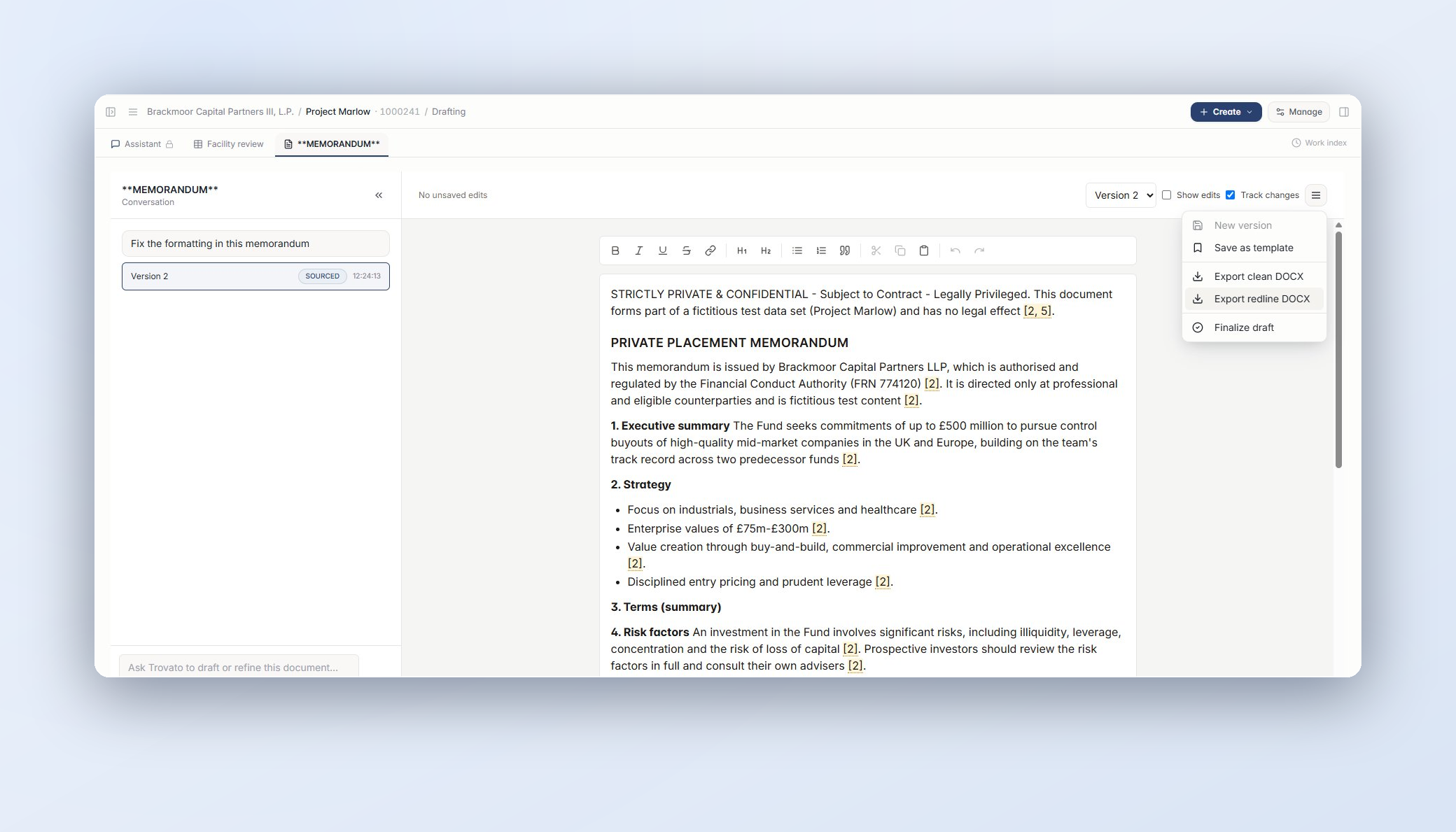
A redline isn't useful until it's in Word. So Trovato's drafts and amendments export as native Word track-changes — real revisions with author and date, not cosmetic strike-through. Open the document and the Review pane lights up exactly as it does with an outside-counsel redline: walk each change, accept or reject, send it back to the other side as something they can mark up in turn.
No copy-pasting between a chat window and a document. No re-marking the AI's suggestions by hand before they're usable. And when you need to redline a whole batch — a stack of NDAs against a firm playbook, say — one click runs each document and returns the marked-up files together, every change cited to source.
Connected to the Systems You Already Run
Trovato doesn't ask you to move your documents. Its connector ecosystem reaches into the platforms firms already depend on — document management systems, contract platforms, dockets, and document stores — and pulls the right material in securely, on demand or on a schedule.
Synced files flow through exactly the same processing and indexing pipeline as anything you upload by hand, so retrieval, citations and audit behave identically wherever a document came from. We're rolling connectors out in stages; the platform shows which are live today and which are coming soon.
Finally, Account for AI Work
Here's the part we think genuinely moves the conversation forward. Trovato attributes the cost of AI work to the matter it was done on. Every model call — across the Assistant, reviews, drafting and agents — is tagged to its matter, frozen at the moment it runs, and rolled up into a per-matter report you can export.
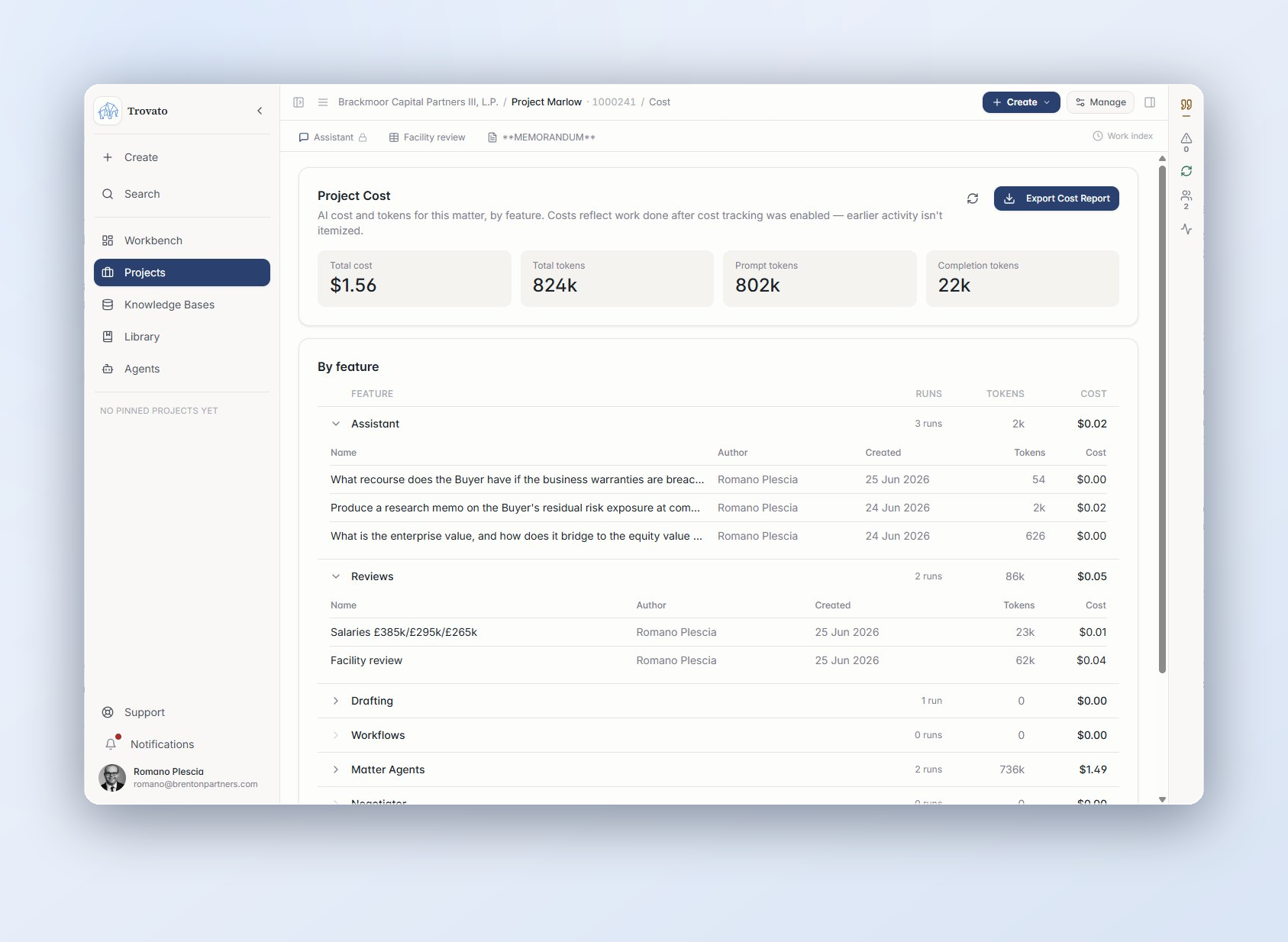
AI stops being an unexplained line in the technology budget and becomes a transparent, auditable part of how work is delivered. Firms can account for, and where appropriate bill for, the AI-assisted work that went into a client's matter — with a clear record of what ran and what it cost. Firm-level budgets cap spend, so there are no surprises at month end.
Pay for What You Use
We've also rethought how legal AI should be bought. Trovato runs on consumption-based pricing — you pay for what you use, rather than committing to a heavy per-seat licence that has to be justified before anyone has even tried it.
For firms that have watched legal AI from the sidelines, waiting for the business case to add up, this changes the maths. Start small, prove the value on real matters, and scale from there — and with per-matter cost attribution, you can see exactly what that value costs as you go.
See It on Your Matters
Twelve months of hard problems, solved by a team I couldn't be prouder of. Trovato is live today.
If you'd like to see it on your own matters, book a demo — we'd love to show you around.
Questions? Reach out below, or get in touch for a walkthrough.